
Industrial IoT (IIoT) has become one of the most transformative technologies reshaping the manufacturing industry. As factories race toward automation, process optimization, and real-time decision-making, IIoT stands at the center of this digital revolution. By connecting machines, sensors, control systems, and enterprise platforms into a unified network, IIoT enables manufacturers to unlock unprecedented levels of efficiency, reduce downtime, and achieve higher productivity.
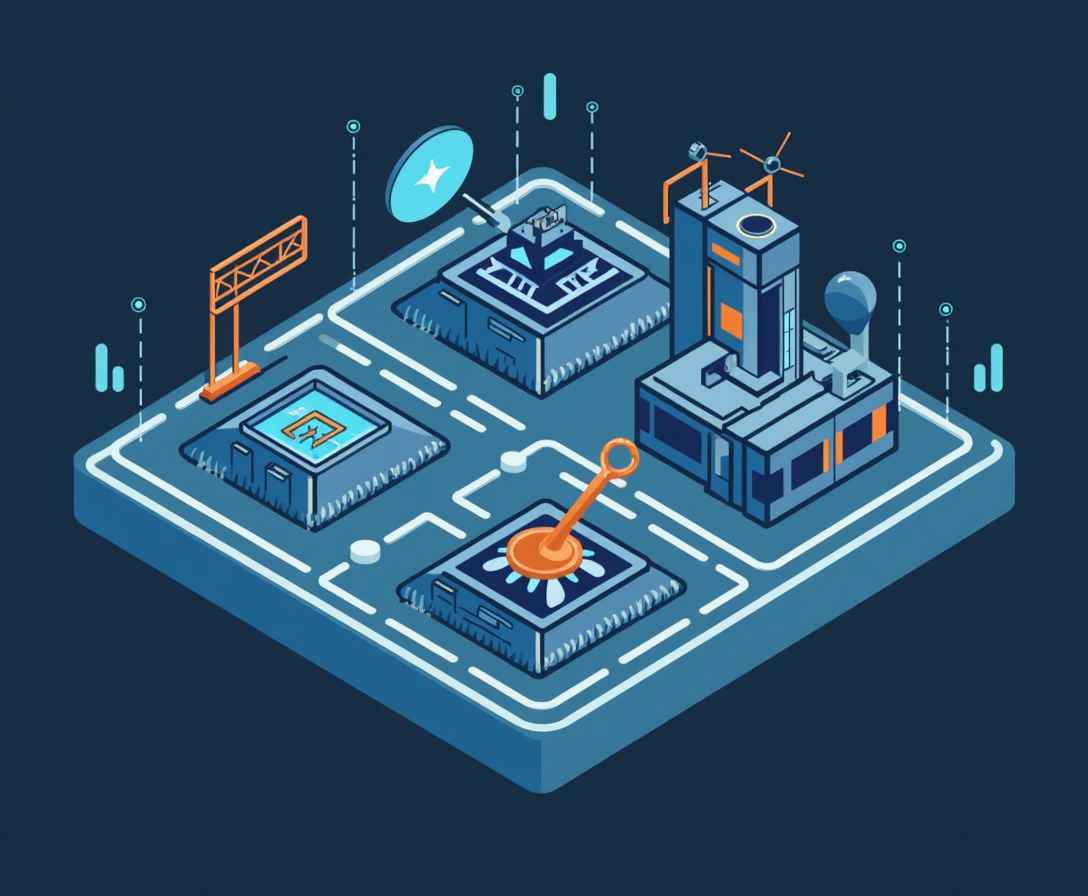
In recent years, global competition, rising material costs, labor shortages, and the demand for rapid production have forced manufacturers to rethink their operational strategies. Smart factories—powered by IIoT—are no longer merely an advantage; they are becoming a necessity for companies seeking long-term sustainability.

This article explores in depth how Industrial IoT drives efficiency in manufacturing plants, the technologies behind it, real-world applications, benefits, challenges, and best practices for implementation.
What Is Industrial IoT (IIoT)?
Industrial IoT refers to the integration of connected devices, sensors, analytics platforms, and intelligent systems within industrial environments. Unlike consumer IoT (smart home devices, wearables, etc.), IIoT focuses on high-value operations such as:
- Manufacturing
- Automation
- Asset monitoring
- Predictive maintenance
- Energy management
- Supply chain optimization
IIoT enables real-time data collection and analysis from machines and processes, allowing companies to make smarter and faster decisions.
Key Technologies Enabling Industrial IoT
To understand how IIoT drives efficiency, it’s important to know the technologies powering it:
1. Sensors and Smart Devices
Sensors capture data such as:
- Vibration
- Temperature
- Pressure
- Humidity
- Machine speed
- Energy consumption
- Material flow
These devices convert physical conditions into digital information that can be analyzed.
2. Connectivity Technologies
IIoT relies on stable communication networks:
- Wi-Fi 6
- 5G industrial networks
- Ethernet/IP
- LoRaWAN
- OPC-UA
- MQTT
5G is especially important because of its low latency and ability to connect thousands of devices simultaneously.
3. Edge Computing
Edge devices process data near the source, improving speed and reducing cloud dependency. This is crucial for:
- Real-time response
- Low-latency control
- Cost efficiency
4. Cloud Platforms
Cloud systems enable:
- Large-scale data storage
- Remote monitoring
- Device management
- Advanced analytics
Major platforms include AWS IoT, Microsoft Azure IoT, and Google Cloud IoT.
5. Artificial Intelligence and Machine Learning
AI/ML models interpret large datasets to:
- Detect anomalies
- Predict failures
- Optimize energy usage
- Improve production scheduling
6. Digital Twins
Digital twins replicate physical assets or systems in a virtual environment, enabling simulation and optimization.
How Industrial IoT Drives Efficiency in Manufacturing
Below are key ways IIoT boosts efficiency across manufacturing operations.
1. Real-Time Machine Monitoring
One of the biggest benefits of IIoT is real-time visibility into machine performance.
Manufacturers can track:
- Cycle times
- Operational speed
- Utilization rate
- Equipment health
- Tool wear
With this visibility, operators can instantly respond to issues before they escalate, reducing downtime and improving productivity.
Example: If a machine’s temperature rises beyond normal limits, the system automatically alerts operators, preventing overheating or breakdown.
2. Predictive Maintenance Reduces Downtime
Traditional maintenance methods—like scheduled maintenance or reactive repair—often cause unnecessary downtime or allow problems to go unnoticed.
IIoT introduces predictive maintenance, which uses real-time sensor data and AI algorithms to detect early signs of machine failure.
Benefits include:
- Reduced repair costs
- Longer equipment lifespan
- Higher uptime
- Lower maintenance labor requirements
Example: Vibration sensors can identify bearing wear weeks before a motor fails, allowing maintenance to be scheduled during non-critical hours.
3. Production Line Optimization
IIoT systems track material movement, cycle time, and bottlenecks across the entire production line.
This enables:
- Faster throughput
- Fewer production delays
- Balanced workloads
- Reduced waste
- Efficient resource allocation
Real-time dashboards help supervisors identify which processes slow down the line and take action instantly.
4. Energy Efficiency and Cost Reduction
Energy is one of the biggest cost drivers in manufacturing.
IIoT helps reduce energy consumption by:
- Monitoring machine energy usage
- Optimizing peak power demand
- Detecting inefficient motors
- Automating energy controls
Smart factories can reduce electricity costs by 10–30% by implementing IIoT-driven energy management.
5. Enhanced Quality Control
IIoT ensures better quality by:
- Monitoring process parameters
- Detecting deviations instantly
- Using AI to detect defects
- Maintaining consistent product specifications
Smart sensors can detect minute variations—such as pressure or temperature fluctuations—that may compromise product quality.
6. Supply Chain and Inventory Optimization
IIoT integrates supply chain data from suppliers, warehouses, and production lines.
This improves:
- Material traceability
- Inventory accuracy
- Demand forecasting
- Lead time reduction
- Automated procurement
RFID tags, GPS sensors, and barcode scanners allow real-time tracking of parts across the entire manufacturing ecosystem.
7. Worker Safety and Process Compliance
IIoT improves worker safety by:
- Monitoring air quality
- Detecting hazardous leaks
- Tracking wearable sensors
- Automating emergency shutdowns
Compliance becomes easier through automated data logging and reporting for audits.
Real-World Applications of Industrial IoT in Manufacturing
1. Automotive Industry
- Robotic assembly lines
- Predictive maintenance on welding robots
- Real-time quality inspection using machine vision
2. Food and Beverage
- Temperature and humidity monitoring
- Traceability of raw materials
- Smart packaging lines
3. Electronics and Semiconductors
- High-precision monitoring
- Automated defect detection
- Cleanroom environment control
4. Chemical and Oil & Gas
- Pipeline monitoring
- Leak detection
- Hazardous condition alerts
5. Heavy Industry
- Monitoring high-power motors
- Digital twins for plant optimization
- Remote control systems
The Benefits of Industrial IoT for Manufacturing Companies
1. Higher Productivity
Workers and machines can operate at maximum efficiency with fewer interruptions.
2. Reduced Operational Costs
Energy, labor, maintenance, and material costs decrease significantly.
3. Improved Equipment Lifespan
Predictive analytics prevent premature failures.
4. Better Decision-Making
Real-time KPIs enable fast and accurate decision-making.
5. Greater Scalability
IIoT platforms can easily be expanded across multiple facilities.
Challenges of Implementing Industrial IoT
Despite the benefits, manufacturers face several challenges:
1. Cybersecurity Risks
Connected devices increase vulnerability to cyberattacks.
2. High Initial Investment
Costs include sensors, connectivity, analytics platforms, and integration.
3. Legacy System Integration
Older equipment may not support IoT connectivity.
4. Skill Gaps
Many workers lack expertise in data analytics, cybersecurity, and automation.
5. Data Overload
Manufacturers need systems to manage and interpret massive amounts of data.
Best Practices for Successful IIoT Implementation
1. Start Small with a Pilot Project
Focus on one area, such as predictive maintenance or energy monitoring.
2. Ensure Strong Cybersecurity
Use encryption, firewalls, and secure authentication.
3. Integrate with Legacy Systems
Use gateways or retrofitting technologies to connect older machines.
4. Invest in Workforce Training
Upskill employees in:
- IoT systems
- Data analytics
- Automation tools
5. Adopt Scalable Platforms
Choose cloud platforms that can grow with the company.
Future Trends: The Next Evolution of Industrial IoT
1. Autonomous Factories
AI-driven systems will run production lines with minimal human intervention.
2. Hyper-Personalized Manufacturing
IIoT will enable rapid customization of products.
3. 6G Connectivity
Lower latency and higher bandwidth for ultra-responsive factories.
4. Sustainability Integration
IIoT will track carbon emissions, water usage, and waste reduction efforts.
5. Collaborative Robots (Cobots)
Connected cobots will work alongside humans safely and efficiently.
Conclusion
Industrial IoT is revolutionizing how manufacturing plants operate. By connecting machines, systems, and people through intelligent networks, IIoT enables unprecedented levels of efficiency, productivity, and operational visibility. Manufacturers that adopt IIoT gain a significant competitive advantage, reduce operational costs, and build more resilient production environments.
Companies that delay adopting IIoT risk being left behind in a rapidly evolving industrial landscape. As factories move toward full digitalization, IIoT stands as the backbone of the modern manufacturing revolution.
