
alwepo.com, Indonesia, a nation known for its abundant natural resources and rapid economic growth, is now at a critical turning point. With global pressures to reduce carbon footprints, intensifying climate change impacts, and rising demand for energy, Indonesia is exploring bold commitments to transform its energy landscape. One of the most ambitious targets being discussed today is the possibility of reaching zero carbon emissions by 2035 supported by the massive development of green and renewable energy.
But the question remains: Is it truly possible for Indonesia to build a sustainable green-energy ecosystem and achieve zero carbon in just over a decade?
This article will analyze Indonesia’s current energy landscape, opportunities, challenges, technologies, and strategic pathways required to achieve zero carbon by 2035.
1. Understanding Indonesia’s Carbon and Energy Landscape
Indonesia ranks among the world’s top emitters of greenhouse gases. Its emissions come mostly from:
- Coal-dominated electricity production
- Deforestation and land-use changes
- Industrial activities
- Transportation
- Waste management
1. Coal Dependency
As of 2024:
- Over 60% of Indonesia’s electricity comes from coal power plants.
- New coal plants continue to be built, although policies now aim to gradually phase them out.
This coal dependency is Indonesia’s biggest barrier to achieving zero carbon by 2035.
2. Energy Demand Growth

Indonesia’s growing population and economy ensure that energy demand will continue rising significantly until 2035. Estimates indicate:
- A 70–100% increase in electricity demand by 2035.
- Rising industrial demand from steel, cement, nickel smelting, and electric vehicle (EV) battery production.
So Indonesia not only needs to reduce emissions — it also needs to meet dramatically growing energy needs.
2. The Concept of Green Energy and Zero Carbon
1. What Is Green Energy?
Green energy refers to power generated from natural resources that are renewable, sustainable, and have minimal environmental impact. Unlike fossil fuels—which release large amounts of greenhouse gases—green energy sources rely on natural processes that regenerate quickly and do not deplete over time.
Key Characteristics of Green Energy
a. Renewable
Green energy comes from sources that naturally replenish themselves.
Examples:
- Sunlight (solar energy)
- Wind (wind energy)
- Flowing water (hydropower)
- Heat from the Earth (geothermal)
- Organic waste (biomass)
These sources will not run out or diminish over centuries, making them far more sustainable than coal, oil, or natural gas.
b. Low-Emission
Green energy produces very little to zero greenhouse gas emissions during operation.
For instance:
- Solar panels generate electricity without burning fuel.
- Wind turbines operate without emitting CO₂.
- Hydropower plants rely on water flow — not combustion.
This reduction in emissions helps slow global warming and improve air quality.
c. Environmentally Sustainable
Green energy minimizes environmental damage such as:
- Land degradation
- Air and water pollution
- Climate change
It also supports long-term ecological balance, making it ideal for a sustainable future.
Types of Green Energy
Below are the main sources of green energy commonly used worldwide:
1. Solar Power
Solar power converts sunlight into electricity or heat using:
- Photovoltaic (PV) panels
- Concentrated solar power (CSP) systems
Benefits:
- Abundant, especially in tropical countries
- Scalable from rooftop systems to large farms
- Zero carbon emissions during operation
2. Wind Power
Wind energy uses turbines driven by wind to generate electricity.
Benefits:
- Clean and renewable
- Ideal for coastal areas and open plains
- Can produce large-scale electricity
3. Hydropower (Hydro Energy)
Hydropower uses flowing or falling water to generate electricity.
Benefits:
- Consistent and reliable
- Provides grid stability
- Also supports irrigation and flood control
4. Geothermal Energy
Geothermal energy harnesses heat stored beneath the Earth’s surface.
Benefits:
- Provides 24/7 baseload power
- Extremely low emissions
- Ideal for volcanic regions like Indonesia
5. Biomass & Biogas
Biomass comes from organic materials such as:
- Wood waste
- Agricultural residue
- Food waste
- Animal manure
Biogas is produced through the decomposition of organic waste.
Benefits:
- Converts waste into energy
- Reduces methane emissions
- Supports rural energy independence
6. Green Hydrogen
Green hydrogen is produced using electrolysis powered by renewable energy (solar, wind, hydro).
Benefits:
- Zero emissions when used as fuel
- Ideal for heavy industries (steel, cement, chemicals)
- Can be stored and transported easily
2. What Is Zero Carbon?
Zero carbon refers to a state in which no net carbon dioxide (CO₂) emissions are released into the atmosphere.
This does not always mean eliminating emissions entirely. Instead, it means ensuring that any remaining emissions are:
- Avoided,
- Reduced, or
- Offset to achieve a net-zero balance.
How Zero Carbon Works
Zero carbon is achieved through a combination of strategies:
1. Using Renewable Energy
Transitioning from fossil fuels to:
- Solar
- Wind
- Hydro
- Geothermal
- Biomass
reduces carbon emissions significantly because these energy sources do not burn carbon-based fuels.
2. Carbon Capture (Carbon Removal)
Technologies such as Carbon Capture and Storage (CCS) remove CO₂ from:
- Industrial processes
- Power plants
- Direct air capture
The captured CO₂ is then stored underground or used in other industries.
3. Reforestation and Ecosystem Restoration
Trees absorb CO₂ naturally through photosynthesis.
Large-scale programs like:
- Reforestation
- Mangrove restoration
- Wetland recovery
help remove carbon from the atmosphere and store it in natural ecosystems.
4. Improving Energy Efficiency
Reducing energy waste decreases the amount of fuel consumption needed.
Examples:
- Energy-efficient appliances
- Better insulation
- LED lighting
- Electric vehicles
Efficiency lowers emissions while reducing energy demand.
3. Indonesia’s Renewable Energy Potential
Indonesia is one of the most resource-rich nations in the world for renewable energy. Its potential includes:
1. Solar Energy
- Over 200 GW solar potential
- 3–4.8 kWh/m²/day of solar irradiation
- Available across all islands
- Rooftop solar can revolutionize household and industrial energy
2. Wind Energy
- Potential of 60 GW
- Best regions include South Sulawesi, East Nusa Tenggara, and Central Java
3. Hydro Energy
- Large river basins and mountainous regions
- Estimated potential of 95 GW
- Ideal for micro-hydro in rural areas
4. Geothermal Energy
- Indonesia holds 40% of the world’s geothermal reserves
- Potential: 29–30 GW
- Currently used: less than 10%
5. Biomass and Waste-to-Energy
- Over 40 GW biomass potential
- Abundant agricultural waste (palm oil, rice husk, wood waste)
- Waste-to-energy for urban communities
6. Green Hydrogen
- Produced from renewable energy
- Ideal for industrial decarbonization
- Can position Indonesia as a global exporter
Indonesia’s renewable potential is more than enough to supply its domestic energy demand—if managed properly.
4. Major Challenges to Achieving Zero Carbon by 2035
Despite massive potential, Indonesia faces significant obstacles.
1. High Cost of Renewable Energy Transition
- Initial investment is expensive
- Solar and wind farms need infrastructure upgrades
- Financing is still dominated by fossil fuel industries
2. Coal Lobby and Political Challenges
- Indonesia is the world’s largest exporter of thermal coal
- Coal contributes significantly to national income
- Powerful coal businesses influence policy decisions
3. Outdated Grid Infrastructure
- National grid not yet ready for decentralized renewable integration
- Inter-island transmission lines insufficient
- Smart grid technology still in early stages
4. Limited Technology Expertise
- Renewable technology manufacturing mostly imported
- Domestic workforce requires new skills
- R&D in green technology still limited
5. Regulatory and Bureaucratic Obstacles
- Complex licensing systems
- Slow renewable energy project approvals
- Inconsistent government policies
6. High Demand for Energy in Industrial Sectors
Industries such as:
- Nickel smelting
- Steel production
- Automotive manufacturing require massive energy — often from coal.
Transitioning these industries to clean energy is extremely challenging.
5. The Roadmap to Building Green Energy for Zero Carbon 2035
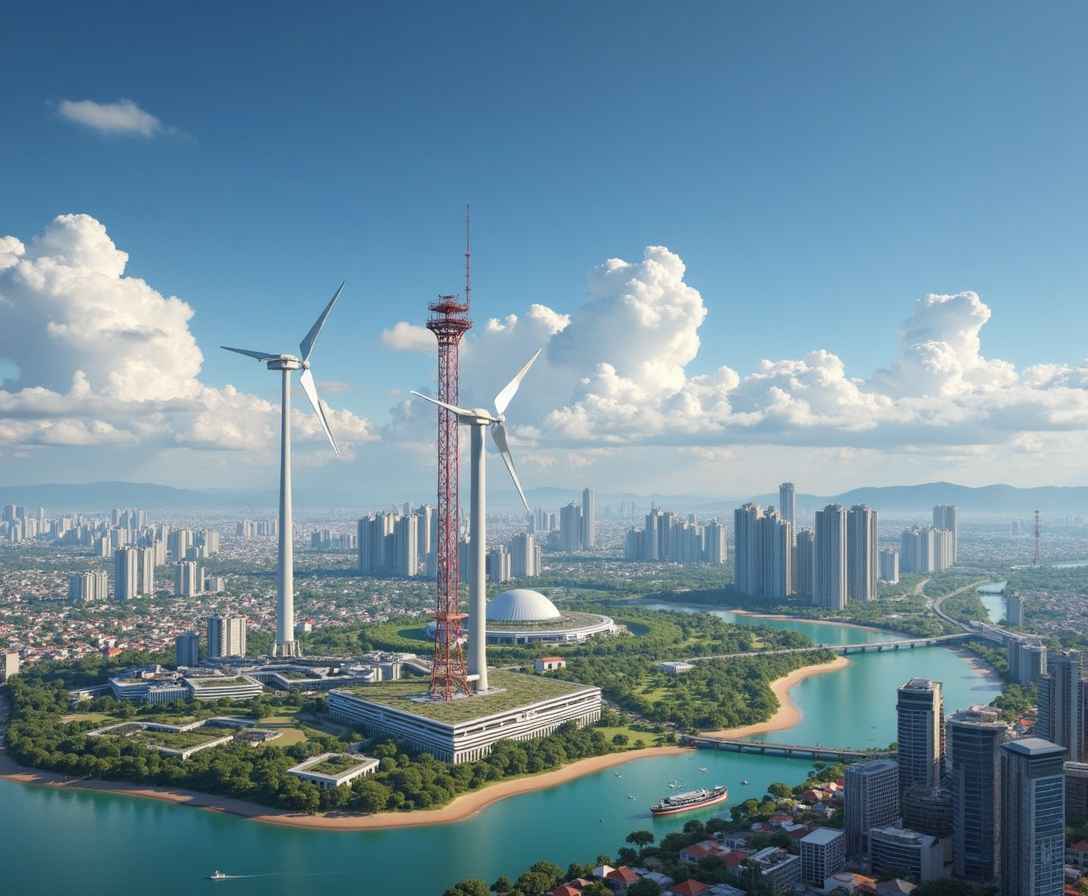
Achieving zero carbon is not impossible — but requires a structured, realistic, and aggressive roadmap.
Below is a practical roadmap Indonesia could adopt.
Step 1: Rapid Phase-Out of Coal (2025–2030)
Key Actions:
- Ban new coal power plant permits
- Gradually retire existing coal plants
- Replace coal baseload with renewable baseload sources (geothermal + hydro)
- Provide transition support for coal workers
Impact:
- Reduces majority of carbon emissions from the energy sector
- Redirects investment toward renewables
Step 2: Massive Investment in Solar and Wind (2024–2035)
Solar Energy Actions:
- Rooftop solar incentive programs
- Mandatory solar installation on new buildings
- Large-scale solar farms in Java, Sulawesi, NTB, and NTT
Wind Energy Actions:
- Develop wind corridors in South Sulawesi and NTT
- Subsidize local turbine manufacturing
Expected Results:
- Solar & wind become Indonesia’s largest energy sources by 2035
- Energy costs decrease due to economies of scale
Step 3: Supercharge Geothermal Development
Geothermal is Indonesia’s secret weapon.
Actions:
- Accelerate exploration licenses
- Government-backed risk insurance for exploration
- Reduce regulatory hurdles
- Build geothermal industrial zones
Results:
- Stable, 24/7 renewable baseload
- Reduces dependency on coal
Step 4: Develop Green Hydrogen Production (2030–2035)
This is crucial for decarbonizing heavy industry.
Applications:
- Steel production
- Chemical manufacturing
- Transportation (maritime, heavy trucks)
- Power storage
Indonesia can become a global green hydrogen exporter.
Step 5: Upgrade the National Grid to a Smart Grid System
Actions Needed:
- Interconnect all islands via HVDC transmission lines
- Implement AI-driven smart grids
- Upgrade substations and storage infrastructure
Benefits:
- Efficient renewable integration
- Reduces blackout risk
- Enables energy trade between regions
Step 6: Electrification of Transportation
Actions:
- Accelerate EV adoption
- Build nationwide charging stations
- Electrify public transport (bus & rail)
- Incentivize electric motorcycle production
Impact:
- Significant reduction in transportation emissions
- Supports Indonesia’s EV battery industry
Step 7: National Reforestation and Carbon Offset Programs
Target:
- Reforest degraded lands
- Expand mangrove conservation
- Incentivize community-led forestry
Benefits:
- Balances unavoidable emissions
- Supports biodiversity
- Generates carbon credit revenue
6. Economic Benefits of Transitioning to Green Energy
Indonesia stands to gain massive economic advantages.
1. Job Creation
Renewables create:
- 3x more jobs than coal
- Opportunities in installation, maintenance, manufacturing
- Green engineering roles
2. Boost to Manufacturing
Indonesia can become a manufacturing hub for:
- Solar panels
- Batteries
- Wind turbine components
- Hydrogen electrolyzers
3. Lower Energy Costs
Renewables become cheaper long-term due to:
- No fuel cost
- Minimal maintenance
- Local energy production
4. Attracting Global Investors
Foreign investors prefer green economies.
Indonesia can attract investment from:
- Japan
- South Korea
- EU countries
- USA
7. Social and Environmental Impact
1. Cleaner Air
Reducing coal will significantly decrease:
- Air pollution
- Respiratory diseases
- Urban smog
2. Energy Access for Rural Areas
Micro solar and micro hydro projects can:
- Electrify remote villages
- Improve local economies
3. Climate Resilience
Zero carbon transition helps:
- Reduce extreme weather impacts
- Protect agriculture
- Safeguard coastal communities
8. Can Indonesia Truly Achieve Zero Carbon by 2035?
Realistic Assessment
Achieving absolute zero carbon by 2035 is extremely ambitious.
However:
✔ Carbon neutrality by 2035
✔ Full coal phase-out by 2040
✔ 70–80% renewable energy mix by 2035
ARE achievable targets if Indonesia commits aggressively.
Critical Conditions Needed
- Strong political leadership
- Massive investment (public + private)
- Regulatory reforms
- Rapid technology transfer
- Public awareness and social support
Without these, Indonesia may fall short.
9. Conclusion: Is Zero Carbon 2035 Possible?
Indonesia has the natural resources to become one of the world’s leading green-energy countries. With abundant solar, geothermal, hydro, and biomass potential, the country can dramatically shift away from fossil fuels.
Is zero carbon by 2035 possible?
➡ Possible? Yes.
➡ Easy? No.
➡ Requires massive change? Absolutely.
But with the right strategy, investment, and political will, Indonesia could become a global leader in sustainable energy — setting a powerful example for developing nations worldwide.
