
alwepo.com, Circular Manufacturing is rapidly emerging as one of the most transformative concepts in modern industrial production. As global industries face increasing pressure from environmental regulations, resource scarcity, and rising operational costs, traditional linear manufacturing models—based on “take, make, dispose”—are no longer sustainable. Circular Manufacturing offers a new paradigm that prioritizes resource efficiency, waste reduction, and long-term economic resilience.
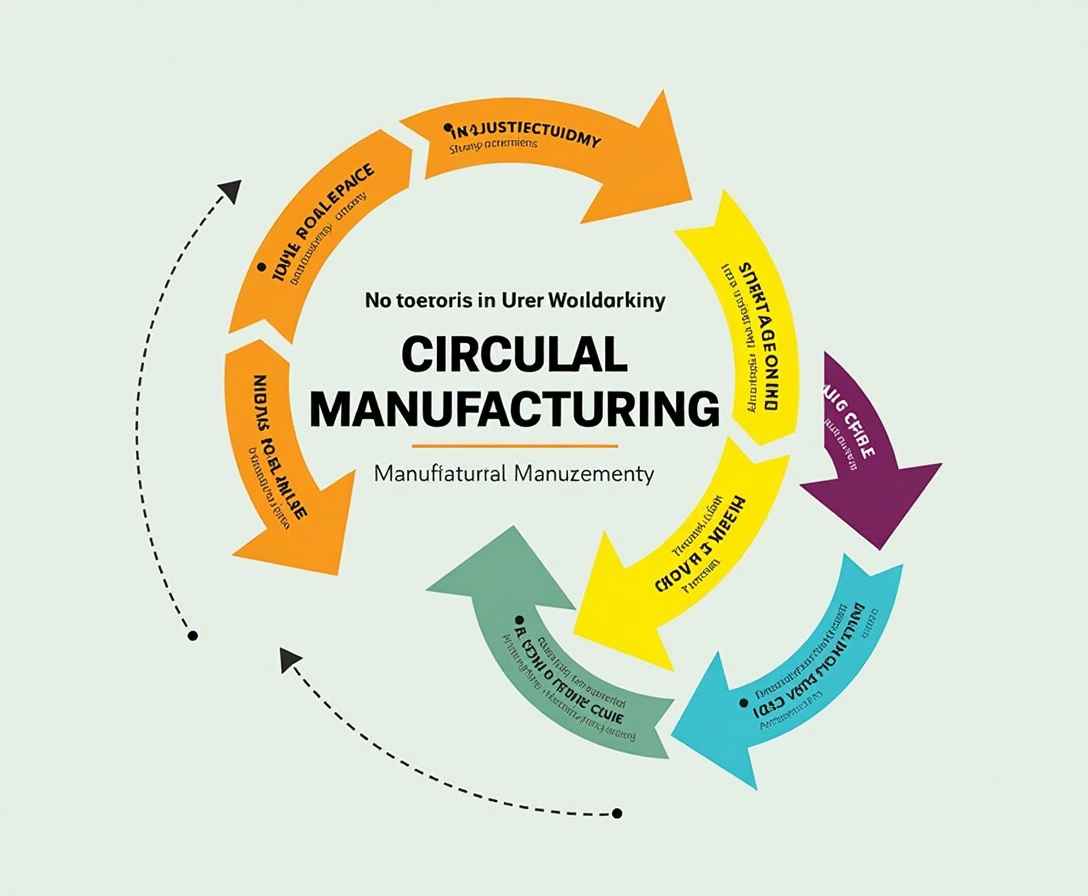
At its core, Circular Manufacturing focuses on keeping materials, components, and products in use for as long as possible through reuse, remanufacturing, recycling, and smart product design. This approach not only minimizes environmental impact but also unlocks significant business value by reducing raw material dependency and improving supply chain stability.
In this article, we will explore the definition, principles, technologies, benefits, challenges, and future outlook of Circular Manufacturing, and why it is becoming a critical strategy for manufacturers worldwide.
What Is Circular Manufacturing?
Circular Manufacturing is an industrial production model aligned with the principles of the circular economy. Unlike traditional linear manufacturing, which extracts raw materials, produces goods, and generates waste at the end of the product life cycle, Circular Manufacturing designs production systems to be restorative and regenerative by nature.
This model integrates sustainable material sourcing, modular product design, closed-loop supply chains, and end-of-life recovery strategies. The goal is to eliminate waste, reduce emissions, and maximize the value of resources throughout the entire product lifecycle.
Circular Manufacturing applies to various industries, including automotive, electronics, aerospace, consumer goods, heavy machinery, and industrial equipment manufacturing.
Linear vs Circular Manufacturing Models
Linear Manufacturing Model
The linear manufacturing model follows a straightforward process:
-
Raw material extraction
-
Manufacturing and assembly
-
Distribution and consumption
-
Disposal as waste
This approach leads to high material consumption, environmental degradation, landfill accumulation, and vulnerability to raw material price volatility.
Circular Manufacturing Model
Circular Manufacturing replaces this with a closed-loop system:
-
Sustainable material selection
-
Efficient manufacturing and modular design
-
Product use, repair, and maintenance
-
Reuse, remanufacturing, or recycling
-
Materials re-enter the production cycle
By closing the loop, manufacturers can significantly reduce waste and carbon emissions while improving resource efficiency.
Core Principles of Circular Manufacturing
1. Design for Circularity
Products are designed from the beginning with durability, modularity, and recyclability in mind. Components are easy to disassemble, repair, and upgrade, extending product lifespan.
2. Resource Efficiency
Circular Manufacturing minimizes raw material input and energy consumption by optimizing processes and reusing materials wherever possible.
3. Closed-Loop Supply Chains
Materials and components are recovered after product use and reintegrated into manufacturing processes, reducing dependence on virgin resources.
4. Waste Elimination
Waste is treated as a resource. By-products, scrap materials, and returned products are repurposed rather than discarded.
5. Lifecycle Responsibility
Manufacturers take responsibility for the entire product lifecycle, including post-consumer recovery and end-of-life management.
Key Technologies Enabling Circular Manufacturing
Industrial Internet of Things (IIoT)
IIoT sensors track material usage, machine performance, and product condition in real time. This data enables predictive maintenance, resource optimization, and lifecycle monitoring.
Artificial Intelligence and Data Analytics
AI-driven analytics help manufacturers optimize production processes, predict material degradation, and identify opportunities for reuse or remanufacturing.
Digital Twins
Digital twins simulate product lifecycles and manufacturing processes, allowing companies to test circular strategies virtually before implementation.
Additive Manufacturing (3D Printing)
3D printing supports on-demand production, component repair, and material efficiency by reducing waste and enabling localized manufacturing.
Advanced Recycling Technologies
Chemical recycling, automated sorting, and material recovery technologies improve the quality and economic viability of recycled materials.
Circular Manufacturing in Different Industries
Automotive Industry
Automotive manufacturers use remanufactured engines, recycled metals, and modular vehicle design to reduce environmental impact and production costs.
Electronics Manufacturing
Electronics companies focus on product disassembly, rare earth material recovery, and refurbishment programs to combat e-waste.
Aerospace and Defense
High-value components such as turbines and avionics are remanufactured and refurbished, extending operational life and reducing costs.
Industrial Machinery
Heavy equipment manufacturers implement take-back programs and remanufacturing facilities to reuse components and reduce downtime.
Business Benefits of Circular Manufacturing
Cost Reduction
By reusing materials and components, manufacturers significantly reduce raw material costs and waste disposal expenses.
Supply Chain Resilience
Circular Manufacturing reduces reliance on volatile global supply chains and critical raw materials.
Regulatory Compliance
Many governments are introducing stricter environmental regulations. Circular Manufacturing helps companies comply with ESG, carbon neutrality, and sustainability requirements.
Brand Value and Customer Trust
Sustainable manufacturing practices enhance corporate reputation and attract environmentally conscious customers and investors.
Innovation and Competitive Advantage
Companies adopting circular strategies often lead innovation in product design, services, and business models.
Environmental Benefits of Circular Manufacturing
Circular Manufacturing contributes directly to global sustainability goals by:
-
Reducing greenhouse gas emissions
-
Minimizing landfill waste
-
Conserving natural resources
-
Lowering water and energy consumption
-
Supporting climate change mitigation
By transitioning to circular models, manufacturing becomes part of the solution rather than a contributor to environmental degradation.
Challenges in Implementing Circular Manufacturing
High Initial Investment
Upgrading equipment, redesigning products, and implementing digital systems require significant upfront capital.
Complex Supply Chain Coordination
Closed-loop supply chains require collaboration among suppliers, customers, recyclers, and logistics providers.
Material Quality Issues
Recycled materials may have inconsistent quality, requiring advanced processing and quality control systems.
Organizational Resistance
Shifting from linear to circular models demands cultural change, new skills, and cross-functional collaboration.
Strategies for Successful Circular Manufacturing Adoption
Start with Pilot Projects
Implement circular initiatives in specific product lines or facilities before scaling across the organization.
Invest in Digital Infrastructure
Data-driven decision-making is essential for monitoring material flows and optimizing circular processes.
Collaborate Across the Value Chain
Partnerships with suppliers, customers, and recycling companies are critical for closed-loop systems.
Redesign Products Gradually
Incorporate modularity, standardized components, and recyclable materials into new product designs.
Measure and Report Performance
Track KPIs such as material circularity, waste reduction, carbon footprint, and lifecycle cost savings.
Circular Manufacturing and ESG Goals
Environmental, Social, and Governance (ESG) frameworks are increasingly influencing investment and corporate strategy. Circular Manufacturing directly supports ESG objectives by:
-
Reducing environmental impact
-
Promoting responsible resource use
-
Enhancing transparency and accountability
-
Supporting long-term economic sustainability
As ESG reporting becomes mandatory in many regions, Circular Manufacturing is no longer optional—it is a strategic necessity.
The Role of Policy and Regulation
Governments worldwide are encouraging Circular Manufacturing through:
-
Extended Producer Responsibility (EPR) laws
-
Carbon pricing and emissions regulations
-
Incentives for recycling and remanufacturing
-
Sustainability reporting requirements
These policies accelerate adoption and level the playing field for sustainable manufacturers.
Future Trends in Circular Manufacturing
Circular-by-Design Products
Future products will be designed entirely around circular principles from concept to disposal.
Product-as-a-Service Models
Manufacturers retain ownership of products and sell usage rather than ownership, enabling better lifecycle control.
Autonomous Circular Factories
AI-powered factories will autonomously optimize resource use, waste recovery, and energy efficiency.
Blockchain for Material Traceability
Blockchain technology will ensure transparent tracking of materials across supply chains.
Why Circular Manufacturing Is the Future of Industry
Circular Manufacturing is not just a sustainability initiative—it is a fundamental shift in how value is created in industrial production. As resource constraints intensify and environmental accountability increases, manufacturers that fail to adopt circular strategies risk falling behind.
Companies that embrace Circular Manufacturing gain operational efficiency, resilience, innovation capacity, and long-term profitability. This makes circularity a competitive advantage rather than a compliance burden.
Conclusion
Circular Manufacturing represents a transformative approach to industrial production that aligns economic success with environmental responsibility. By redesigning products, processes, and supply chains around circular principles, manufacturers can reduce waste, lower costs, and build sustainable business models for the future.
As technology advances and regulatory pressure increases, Circular Manufacturing will become the standard rather than the exception. Manufacturers that act today will lead tomorrow’s industrial landscape.
