
alwepo.com, Human–Machine Collaboration – Manufacturing is undergoing a historic shift. Factories are no longer places where machines simply replace humans. Instead, a new model is emerging—one where humans and machines collaborate as partners. This concept, known as Human–Machine Collaboration (HMC) or Human–Robot Collaboration (HRC), is reshaping production lines, decision-making, workflow structures, and the skills required in modern industry.
Driven by Industry 4.0, robotics, automation, AI, and data-driven manufacturing systems, companies are redesigning their workforce models to integrate the best of both worlds: the precision and speed of machines with the creativity, judgment, and adaptability of human workers. This combination has become essential for staying competitive in a global market demanding higher productivity, better quality, and sustainable operations.
This article explores how human–machine collaboration works, why it matters, what technologies enable it, and how it is redefining the manufacturing workforce for decades to come.
Why Human–Machine Collaboration Matters in Modern Manufacturing
Human–machine collaboration is more than just a technology trend. It is a strategic response to several challenges:
1. Rising Demand for Productivity and Efficiency
Global competition puts pressure on factories to produce more with fewer resources. Machines excel at repetitive tasks, while humans bring problem-solving and creativity. Together, they unlock new efficiencies.
2. Skilled Labor Shortages

Many countries face a shortage of technical talent. Automation fills the gaps, while humans shift to higher-value roles such as supervision, quality management, and system optimization.
3. Increasing Product Complexity
Manufacturers now produce more customized products in shorter cycles. Machines provide precision, while humans manage complexity and adjustments.
4. Need for Higher Safety Standards
Collaborative robots (cobots) reduce the risk of accidents by handling hazardous tasks. Humans oversee, program, and maintain them.
5. Digital Transformation and Industry 4.0
Smart factories integrate IoT, AI, and robotics. Human–machine collaboration is the operational model that allows these technologies to work together harmoniously.
Understanding Human–Machine Collaboration
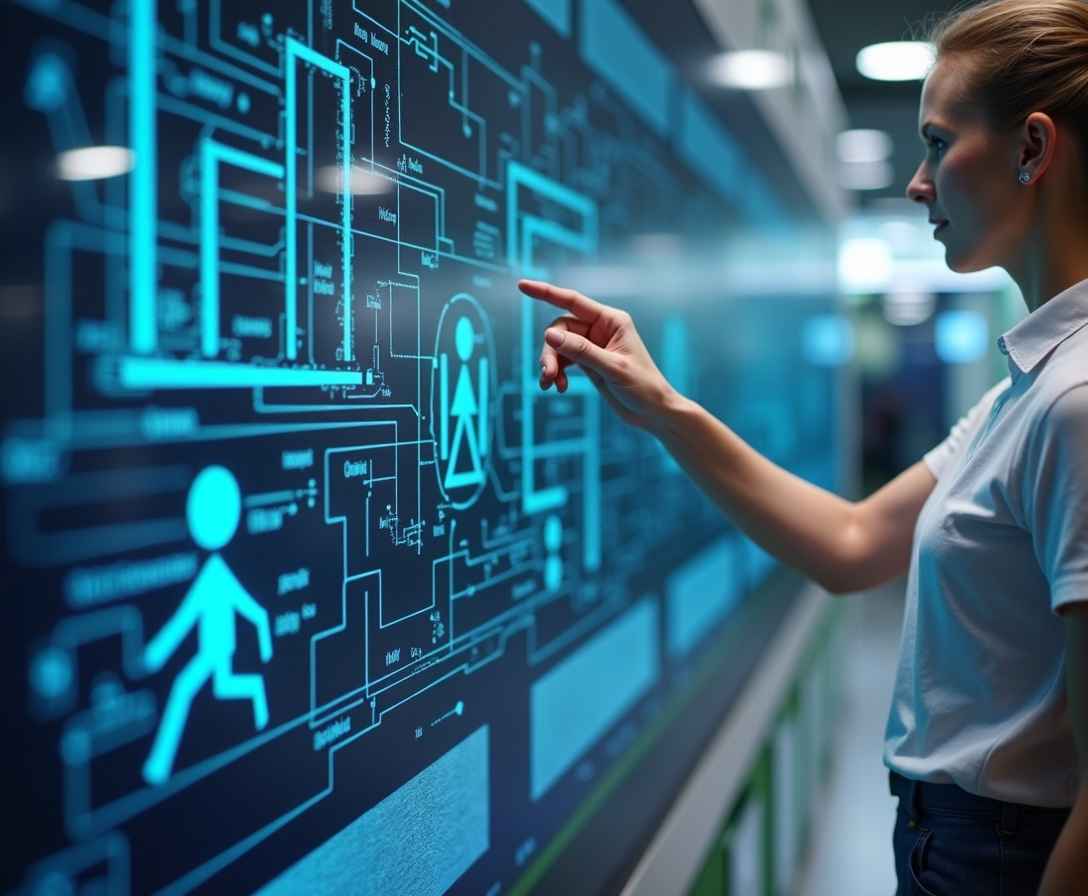
Human–machine collaboration refers to the integration of human capabilities with machine intelligence and automation technologies. Instead of replacing human workers, machines augment their abilities. The collaboration spectrum includes:
1. Coexistence
Humans and machines work in separate spaces without interaction. This is the most traditional form.
2. Sequential Collaboration
Humans and machines share workspaces but perform tasks one after the other.
3. Cooperative Collaboration
Humans and machines work simultaneously on related tasks.
4. Responsive Collaboration
Machines adapt their movements or speed based on the human worker’s position and actions.
5. Collaborative Autonomy
AI-powered machines make decisions but remain under human supervision, ensuring safety and alignment with goals.
The most advanced model today is the use of cobots—robots designed specifically to collaborate safely with humans.
Key Technologies Enabling Human–Machine Collaboration
Several emerging technologies make human–machine collaboration possible:
1. Collaborative Robots (Cobots)
Cobots are designed to work safely alongside humans. They have:
-
Force-limiting sensors
-
Lightweight structures
-
Simpler programming interfaces
-
Built-in safety mechanisms
Cobots assist in tasks such as assembly, packaging, welding, and inspection.
2. Artificial Intelligence and Machine Learning
AI improves machine decision-making by analyzing patterns, optimizing processes, and predicting failures. AI enables:
-
Autonomous quality control
-
Predictive maintenance
-
Real-time defect detection
-
Intelligent material handling
AI allows machines to “understand” tasks and adapt alongside human workers.
3. Industrial IoT (IIoT)
Sensors, connected devices, and data analytics create a real-time view of factory operations. IIoT helps:
-
Synchronize machine and human workflows
-
Improve visibility into equipment performance
-
Track material movement
-
Enhance factory-wide coordination
IIoT is the backbone of connected collaboration.
4. Augmented Reality (AR) and Virtual Reality (VR)
AR and VR tools assist workers with:
-
Hands-free instructions
-
Digital overlays for assembly
-
Real-time error detection
-
Training simulations
These technologies enhance worker skills and reduce the risk of mistakes.
5. Autonomous Mobile Robots (AMRs)
AMRs move materials around the factory floor without human intervention. They work alongside humans for:
-
Inventory transport
-
Raw material movement
-
Finished goods handling
AMRs reduce manual labor and improve workflow efficiency.
6. Digital Twins
Digital twins simulate machines, processes, or entire factories. They allow:
-
Real-time monitoring
-
Predictive optimization
-
Virtual testing of human–machine workflows
This accelerates training, planning, and continuous improvement.
Benefits of Human–Machine Collaboration in Manufacturing
1. Higher Productivity
Machines perform repetitive tasks continuously, while humans focus on analysis, troubleshooting, and decision-making. This division increases overall output.
2. Improved Product Quality
AI and cobots reduce errors and maintain high precision. Humans can supervise quality and adjust processes in real time.
3. Better Safety Conditions
Machines handle hazardous or physically demanding tasks, reducing injuries and improving workplace safety.
4. Workforce Empowerment and New Skills
Workers adopt roles such as:
-
Robot operator
-
Automation technician
-
Data analyst
-
Maintenance engineer
Instead of eliminating jobs, collaboration creates higher-value opportunities.
5. Greater Flexibility and Customization
Human creativity combined with machine speed allows factories to respond quickly to changing customer demands.
6. Lower Operational Costs
Reduced downtime, fewer defects, and optimized workflows lead to significant cost savings.
How Human–Machine Collaboration Changes Manufacturing Roles
1. From Operators to Supervisors
Workers no longer manually operate every machine. Instead, they:
-
Oversee automated systems
-
Adjust parameters
-
Solve production bottlenecks
2. From Manual Labor to Problem Solving
Human tasks shift from physical actions to cognitive ones.
3. From Fixed Jobs to Skill-Based Work
Instead of rigid roles, workers adapt to technologies and learn continuously.
4. From Routine Activities to Creativity and Innovation
Machines handle predictability; humans handle complexity.
Human–Machine Collaboration Use Cases in Manufacturing
1. Assembly Lines
Cobots aid in:
-
Screwing
-
Welding
-
Component placement
-
Material handling
This reduces fatigue and ensures consistency.
2. Quality Inspection
AI cameras detect defects faster than human eyes, while workers validate findings and make decisions.
3. Predictive Maintenance
AI predicts equipment failures. Workers perform targeted maintenance before breakdowns occur.
4. Logistics and Material Handling
AMRs transport materials, while humans concentrate on higher-level tasks.
5. Packaging and Palletizing
Cobots lift heavy loads and perform repetitive stacking, reducing injury risk.
6. Training and Skills Development
VR simulations prepare workers for complex tasks in a safe virtual environment.
Challenges in Implementing Human–Machine Collaboration
1. High Upfront Investment
Robotics, sensors, and AI require capital investment. ROI must be evaluated thoroughly.
2. Workforce Reskilling
Workers need training in:
-
Robotics operation
-
Data interpretation
-
Digital tools
-
Maintenance of automated systems
3. Safety Concerns
Human safety must remain a top priority. Machines must follow strict safety protocols.
4. Change Management
Resistance to change is common. Awareness, training, and leadership support are essential.
5. Cybersecurity Risks
Connected systems introduce new vulnerabilities. Protection is critical for safe operations.
Human–Machine Collaboration and Industry 4.0
Industry 4.0 integrates advanced technologies into manufacturing—IoT, AI, robotics, and cloud systems. Human–machine collaboration is the workforce structure that supports Industry 4.0 by:
-
Connecting humans with machines
-
Sharing decision-making tasks
-
Increasing factory intelligence
-
Supporting real-time optimization
It is the bridge between digital transformation and the human element.
Workforce Reskilling: Preparing Humans for Smart Factory Environments
Successful collaboration requires upgraded skills:
1. Technical Skills
-
Operating cobots
-
Programming basic robotic functions
-
Understanding sensors and automation
2. Digital Skills
-
Using tablets, dashboards, and data systems
-
Reading machine analytics
-
Basic AI and IoT understanding
3. Soft Skills
-
Critical thinking
-
Problem-solving
-
Adaptability
-
Communication across human–machine teams
4. Safety and Compliance Skills
Workers must learn to coexist safely with autonomous systems.
Future Outlook: What’s Next for Human–Machine Collaboration?
1. More Intelligent Cobots
Cobots will become more responsive and able to predict human movements.
2. Fully Immersive AR Workplaces
Digital overlays will guide workers step-by-step in real time.
3. Autonomous Factories With Human Oversight
Humans will supervise entire production lines through central control systems.
4. Expansion of Digital Twins
Every worker may have access to digital replicas of machines for predictive planning.
5. Integration of Generative AI
GenAI will help:
-
Optimize production
-
Improve worker instructions
-
Automate decision support
6. Collaborative AI Managers
AI systems will increasingly take on roles such as:
-
Scheduling
-
Resource allocation
-
Predictive insights
Humans will remain responsible for final decisions and strategic direction.
Conclusion: The Future of Manufacturing is Human–Machine Teamwork
The manufacturing workforce is transforming rapidly. Instead of competing with machines, workers now collaborate with them in a system designed for higher efficiency, safety, and innovation. Human–machine collaboration is the future workforce model—one that balances automation with human intelligence. Companies that adopt this model gain productivity, quality, agility, and long-term competitiveness.
As technology evolves, the role of humans becomes even more important: guiding, training, supervising, innovating, and ensuring that machines operate ethically, safely, and effectively. Manufacturing is not moving toward a machine-dominated future—it is moving toward a collaborative one.
Human–machine collaboration is not just the next phase of manufacturing.
It is the new standard.
